Like the United States of America, biblical values and Christian heritage influenced the founding of Canada:
Long before Canada became a unified nation stretching from coast to coast, its landscape was shaped by diverse communities, early explorers, and deep-seated convictions. When the early settlers arrived, they brought with them a worldview profoundly rooted in the Christian faith. For centuries, the moral fabric of European legal traditions, the ideas of human dignity, and the pursuit of justice were explicitly informed by the pages of the Holy Scriptures. As the modern world began to take shape in British North America, a group of leaders gathered with a bold dream: to forge a new country. But they didn't just want to build cities and rail lines—they wanted to build a society anchored to an enduring, transcendent foundation.
In 1867, thirty-six delegates—known today as the Fathers of Confederation—gathered to draft the framework for a new federal state under the British North America Act. As they debated what to name this vast territory, a delegate named Sir Samuel Leonard Tilley, the Premier of New Brunswick, found inspiration during his morning devotions. Reading from Psalm 72, verse 8, the words struck him: 'He shall have dominion also from sea to sea, and from the river unto the ends of the earth.' Tilley proposed that instead of a 'Kingdom' or a 'Republic,' the new nation should officially be called the Dominion of Canada. It was a deliberate statement of humility and purpose: an acknowledgment that this vast, beautiful land ultimately belonged under the sovereignty and care of God.
If you walk through the heart of Canada’s capital today, you will find this Biblical heritage literally etched into the very stones of the nation’s parliament. Above the south window of the Peace Tower, builders carved words from Psalm 72:1, declaring a prayer that justice and fairness would guide Canadian life. On the eastern face, the phrase 'He shall have dominion from sea to sea' stands as a permanent reminder of the nation’s birthright. Walk toward the western side, and you will read the sobering warning of Proverbs 29:18: 'Where there is no vision, the people perish.' These were not mere decorative choices; they were the intentional design of a generation that believed a healthy, free society required moral wisdom, divine guidance, and an unwavering commitment to truth.
This foundation gave rise to core virtues that Canadians hold dear: peace, order, goodness and small government. Biblical teachings on loving one's neighbour and caring for the vulnerable directly fueled the creation of Canada's schools, hospitals, and charitable institutions. Decades later, when Canada updated its constitution in 1982, this legacy was firmly cemented. The very first line of the Canadian Charter of Rights and Freedoms proudly states: 'Whereas Canada is founded upon principles that recognize the supremacy of God and the rule of law.' This legal bedrock ensures that human rights are protected precisely because they are granted by God, rather than arbitrarily given or taken away by a government.
Today, Canada is a diverse, modern nation. While its cultural landscape continues to grow and change, the blueprint laid down by its founders remains. The story of Canada's founding is an invitation to look back at the ancient truths that shaped our heritage—and to remember the enduring vision of a country built from sea to sea upon the principles of faith, freedom, and justice for all.
Let us teach our children to be proud of our heritage!
Greater is He! 1 John 4:4
Like the United States of America, biblical values and Christian heritage influenced the founding of Canada:
Long before Canada became a unified nation stretching from coast to coast, its landscape was shaped by diverse communities, early explorers, and deep-seated convictions. When the early settlers arrived, they brought with them a worldview profoundly rooted in the Christian faith. For centuries, the moral fabric of European legal traditions, the ideas of human dignity, and the pursuit of justice were explicitly informed by the pages of the Holy Scriptures. As the modern world began to take shape in British North America, a group of leaders gathered with a bold dream: to forge a new country. But they didn't just want to build cities and rail lines—they wanted to build a society anchored to an enduring, transcendent foundation.
In 1867, thirty-six delegates—known today as the Fathers of Confederation—gathered to draft the framework for a new federal state under the British North America Act. As they debated what to name this vast territory, a delegate named Sir Samuel Leonard Tilley, the Premier of New Brunswick, found inspiration during his morning devotions. Reading from Psalm 72, verse 8, the words struck him: 'He shall have dominion also from sea to sea, and from the river unto the ends of the earth.' Tilley proposed that instead of a 'Kingdom' or a 'Republic,' the new nation should officially be called the Dominion of Canada. It was a deliberate statement of humility and purpose: an acknowledgment that this vast, beautiful land ultimately belonged under the sovereignty and care of God.
If you walk through the heart of Canada’s capital today, you will find this Biblical heritage literally etched into the very stones of the nation’s parliament. Above the south window of the Peace Tower, builders carved words from Psalm 72:1, declaring a prayer that justice and fairness would guide Canadian life. On the eastern face, the phrase 'He shall have dominion from sea to sea' stands as a permanent reminder of the nation’s birthright. Walk toward the western side, and you will read the sobering warning of Proverbs 29:18: 'Where there is no vision, the people perish.' These were not mere decorative choices; they were the intentional design of a generation that believed a healthy, free society required moral wisdom, divine guidance, and an unwavering commitment to truth.
This foundation gave rise to core virtues that Canadians hold dear: peace, order, goodness and small government. Biblical teachings on loving one's neighbour and caring for the vulnerable directly fueled the creation of Canada's schools, hospitals, and charitable institutions. Decades later, when Canada updated its constitution in 1982, this legacy was firmly cemented. The very first line of the Canadian Charter of Rights and Freedoms proudly states: 'Whereas Canada is founded upon principles that recognize the supremacy of God and the rule of law.' This legal bedrock ensures that human rights are protected precisely because they are granted by God, rather than arbitrarily given or taken away by a government.
Today, Canada is a diverse, modern nation. While its cultural landscape continues to grow and change, the blueprint laid down by its founders remains. The story of Canada's founding is an invitation to look back at the ancient truths that shaped our heritage—and to remember the enduring vision of a country built from sea to sea upon the principles of faith, freedom, and justice for all.
Let us teach our children to be proud of our heritage!
Greater is He! 1 John 4:4
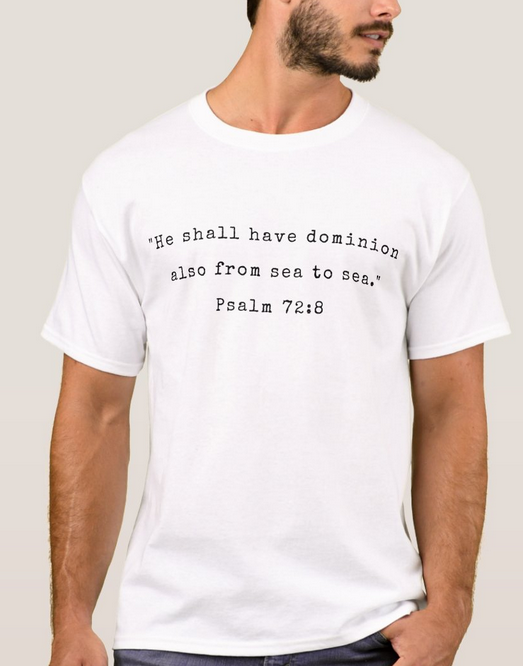 Image 1 of 6
 Image 2 of 6
 Image 3 of 6
 Image 4 of 6
 Image 5 of 6
 Image 6 of 6